

The U.S. home improvement and services market is projected to reach approximately $688 billion by 2029, according to the Home Improvement Research Institute, creating significant opportunity for franchise brands like Local Handyman. In this market, Local Handyman has positioned itself as a franchise opportunity focused on growth and impact without the burden of high overhead costs. By Lizzy Yeserski
The U.S. home improvement and services market is projected to reach approximately $688 billion by 2029, according to the Home Improvement Research Institute, creating significant opportunity for franchise brands like Local Handyman. In this market, Local Handyman has positioned itself as a franchise opportunity focused on growth and impact without the burden of high overhead costs.
“The home service industry is a multi-billion-dollar industry and growing all the time,” said Colin Sprake, CEO of Local Handyman, bestselling author and mentor. “Local Handyman was developed so that people would come into the brand and grow and scale with us.”
Sprake purchased the company in 2023 when it operated solely in Canada and had fewer than 20 territories. Since then, the company has experienced dramatic growth, surpassing 100 territories sold.
“We are one of the fastest-growing home service brands in America right now,” Sprake said.
Part of that momentum stems from Sprake’s passion for changing lives. For nearly 30 years, he has coached and mentored over 110,000 business owners.
“I really want to help a lot of people get to financial independence,” Sprake said. “A lot of franchisees are husband-and-wife teams or veterans, and nothing energizes me more than watching them achieve incredible results in their businesses and make a huge impact on their local communities.”
Featuring an easy-to-follow system, Local Handyman encourages franchisees to make that impact. The brand operates a mobile service model that doesn’t require any brick-and-mortar investment and keeps monthly overhead low. Owners begin with three territories, three vans and three handymen, meaning home improvement skills aren’t required. In fact, the corporate team prefers owners to focus on operations and growth rather than work inside their businesses as handymen.
The company also emphasizes speed and high-level support during onboarding. Sprake noted that franchisees can be fully operational in under three months.
“We have incredible systems and incredible support,” Sprake said. “Our onboarding system is one of the things that’s super unique
about us. From the day you sign the franchise agreement, eight weeks later, you’re up and running.”
Additionally, company support continues long after launch.
“We have coaching and mentoring as they start to grow, and then once they get to six figures and seven figures. Those mentorship groups are there for the life of the business,” Sprake said.
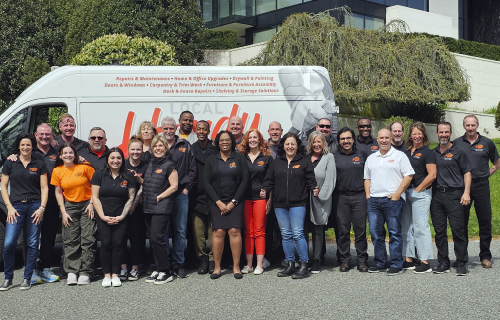
The company culture is another differentiating factor for Local Handyman. Franchisees collectively refer to themselves as the “handy fam,” reflecting the collaborative atmosphere Sprake has worked to create.
“We truly care,” he said. “We care about the success of the franchisee. We care about the work that the handymen do. We care for the handyman, and we have this culture of care that I don’t think a lot of companies have.”
That culture of care extends beyond business performance, shaping the impact franchisees make in their local communities.
“My favorite statement has always been, ‘If you want to make a million dollars, help a million people,’” Sprake said.
Lizzy Yeserski