

Once viewed as something people did briefly before or after workouts, stretching is increasingly recognized as a key component of mobility, recovery and long-term physical health. For brands entering the wellness space early, that shift presents an opportunity to help define what the category becomes, and that’s exactly what iFlex® Stretch Studios is doing. By Tamara Rahoumi
Once viewed as something people did briefly before or after workouts, stretching is increasingly recognized as a key component of mobility, recovery and long-term physical health. For brands entering the wellness space early, that shift presents an opportunity to help define what the category becomes, and that’s exactly what iFlex® Stretch Studios is doing.
When the first location opened in 2022, the concept of assisted stretching as a standalone service was still unfamiliar to consumers. A handful of boutique brands had begun experimenting with the model, but most people still associated stretching with quick post-workout cool-downs or physical therapy sessions. Turning it into a structured, professionally guided service required education and demonstration, and those components have played an important role in shaping how the category is understood today.
“Consumer education was critical in the early stages,” said Senior Vice President of Operations Austin Martinez, MS, ATC, CSCS. “Because most people had limited exposure to assisted stretching, there was confusion between assisted stretching and the passive flexibility exercises you might try on your own.”
As more consumers become aware of the benefits, the category itself has started to broaden. Rather than focusing solely on flexibility, assisted stretching is increasingly positioned within a larger wellness conversation. Today, studios are attracting a diverse mix of clients, including active individuals looking to support performance, desk-bound professionals dealing with chronic tightness and older adults prioritizing mobility.
It makes sense that assisted stretching has gained traction at this moment. A growing focus on longevity and recovery culture within fitness communities, along with the physical consequences of sedentary work, has contributed to rising demand for services that support better movement and pain-free daily activity.
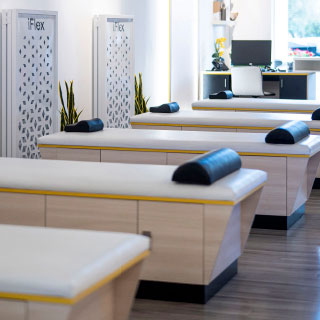
For iFlex Stretch Studios, the goal has been to bring structure and consistency to what was once considered an informal practice. Sessions combine guided techniques with specialized equipment and data tracking systems to measure improvements in range of motion over time.
“Today, iFlex defines the category not just as stretching help but as a holistic mobility and recovery solution,” Martinez explained.
Because the space isn’t saturated yet, the opportunity is ripe for the taking.
“Assisted stretching franchising is compelling because the category is still in an early stage, allowing new players to grow with rising consumer awareness,” said Verdine Baker, CEO.
In addition to the market timing, the model offers operational advantages that appeal to many prospective owners. Studios can operate in relatively small footprints and require fewer resources to run, creating a leaner path to entry. The business also is designed around longevity and growth potential.
“Models like iFlex offer membership-based recurring revenue, which helps stabilize cash flow,” said Baker. “By integrating standardized tools and evidence-based protocols into sessions, the brand elevates stretching from a general wellness fad to a structured, measurable service.”
iFlex Stretch Studios offers franchisees the chance to build a thriving business while shaping how assisted stretching is understood in their local communities. As the wellness landscape continues to evolve, the combination of category growth and structured support may prove to be one of the brand’s most compelling advantages.
Tamara Rahoumi