

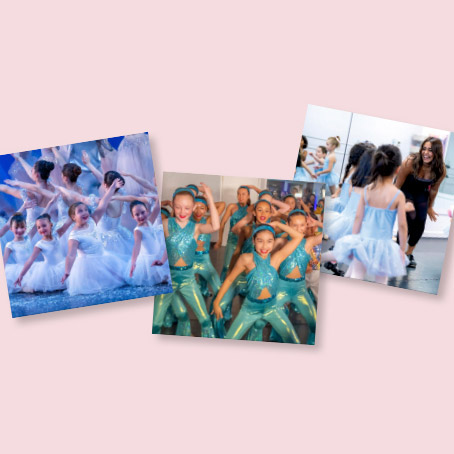
At Twinkle Star Dance™ Academy, care is a foundational part of the business. Co-founders and husband-and-wife team Paul and Tiffany Henderson have spent decades building a program that views children’s dance as more than a competitive activity. By Tamara Rahoumi
At Twinkle Star Dance™ Academy, care is a foundational part of the business. Co-founders and husband-and-wife team Paul and Tiffany Henderson have spent decades building a program that views children’s dance as more than a competitive activity.
Tiffany brought an academic lens to that conviction, earning a Master of Applied Positive Psychology degree from the University of Pennsylvania and applying that research to the brand’s curriculum and methodology. That research, “Mood Changes in Children and Adolescents in Dance Classes: A Prospective Repeated-Measures Study,” was peer-reviewed and published in Frontiers in Psychology in 2026.
“People think, ‘Oh, it’s just dance classes,’” Paul said. “But it’s so much more than that. I want to prove that, for a lot of kids, dance classes are the answer to getting them through anxiety around phones and comparison culture, and I think there’s a neurological connection between learning choreography and developing skills to learn quickly and retain information.”
Paul also noted that Twinkle Star Dance Academy emphasizes community and a sense of belonging, which extends outward in ways that compound over time. Families who enter as strangers often develop relationships that last for years. Borrowing from the language of space exploration, Paul likens the experience to the “overview effect,” a shift in perspective that occurs when someone steps back and sees the full picture of what they are a part of. For franchise owners, that picture includes recitals, milestones and relationships built over time.
“Getting to know these kids and families for decades is incredible,” Paul said. “I want people to understand this is a real business, but it does real good, too. It’s something you can feel genuinely proud of for the rest of your life.”
That sense of purpose is paired with a business model designed around multiple revenue streams. In addition to tuition, franchisees may generate revenue through performance fees, costumes and ticket sales, creating several avenues for business growth.
“It doesn’t take very long before you realize your impact on the community and that the work you’re doing actually matters,” Paul said.
For the right business owner, that’s the whole point: meaningful work, rooted in community, built to last.
Tamara Rahoumi