

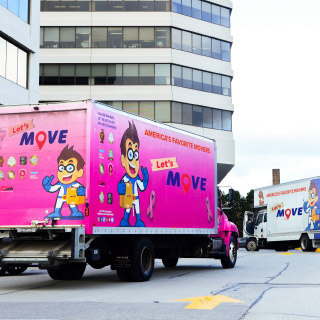
In a crowded industry where most franchises blend together, Let’s Move stands out for all the right reasons. This emerging brand isn’t just expanding rapidly across North America; it’s rethinking what a service-based franchise can be. With a model that simplifies ownership, prioritizes operational focus and helps retain customer loyalty, it’s redefining how modern franchise systems are built for growth. By Tamara Rahoumi
In a crowded industry where most franchises blend together, Let’s Move stands out for all the right reasons. This emerging brand isn’t just expanding rapidly across North America; it’s rethinking what a service-based franchise can be. With a model that simplifies ownership, prioritizes operational focus and helps retain customer loyalty, it’s redefining how modern franchise systems are built for growth.
Let’s Move, originally Let’s Get Moving, began humbly in Toronto in 2010 with a single truck. Today, it boasts more than 65 locations across two countries and serves an average of 140,000 customers annually, offering professional moving, packing and storage services. However, what sets it apart isn’t scale alone. It’s a business model built for the modern entrepreneur.
“Our biggest differentiator is our Uber-style business model, in which the home office handles all the sales and marketing – from lead generation and booking to campaign strategy – so franchisees can focus on running day-to-day operations and building strong local teams,” explained Tiam Behdarvandan, founder and owner of Let’s Move.
It’s a simple but transformative idea: take the weight of marketing off franchisees’ shoulders so they can prioritize team building and service delivery. This shift in responsibility eliminates a major hurdle that burdens traditional service franchises – the need for owners to be marketers, managers and operators all at once. Instead, Let’s Move offers a more focused path: do fewer things, better.
With a referral rate at over 90%, the company has built something rare in the moving world: repeat business and real customer loyalty.
“That referral rate is more than a statistic, it’s a growth engine,” said Behdarvandan. “It means our franchisees aren’t constantly chasing new customers because happy clients are doing that work for them.”
For a young brand, the infrastructure is unusually mature. New franchisees gain access to over 110 hours of training videos, covering everything from operations to on-the-ground team training.
“Even with zero industry experience, a new franchisee can confidently build a team, deliver an exceptional customer experience and grow their location from day one,” Behdarvandan emphasized.
This level of support isn’t just nice to have, it’s essential. This is especially true for first-time business owners navigating an unfamiliar field. Risk, often the greatest barrier to franchise investment, is directly addressed by the brand’s systematized approach.
“We mitigate risk by giving franchisees a proven system, not a guess,” Behdarvandan explained. “From centralized booking and lead generation to operational support and transparent financial benchmarks, our model is built to eliminate the guesswork that causes most small businesses to stumble.”
Even funding is made easier for franchisees thanks to partnerships Let’s Move has in place to help new owners structure smart investments.
Ultimately, this is a business for builders – people who thrive in hands-on environments and are energized by team dynamics and local credibility. Industry experience is secondary, so long as you have a strong work ethic, people skills and the drive to follow a system.
As Let’s Move continues its rapid expansion across North America and eyes potential international markets, it’s rewriting what emerging brands can be. It’s not just another moving company, but it’s a model for new franchises to build something that lasts.
Tamara Rahoumi